



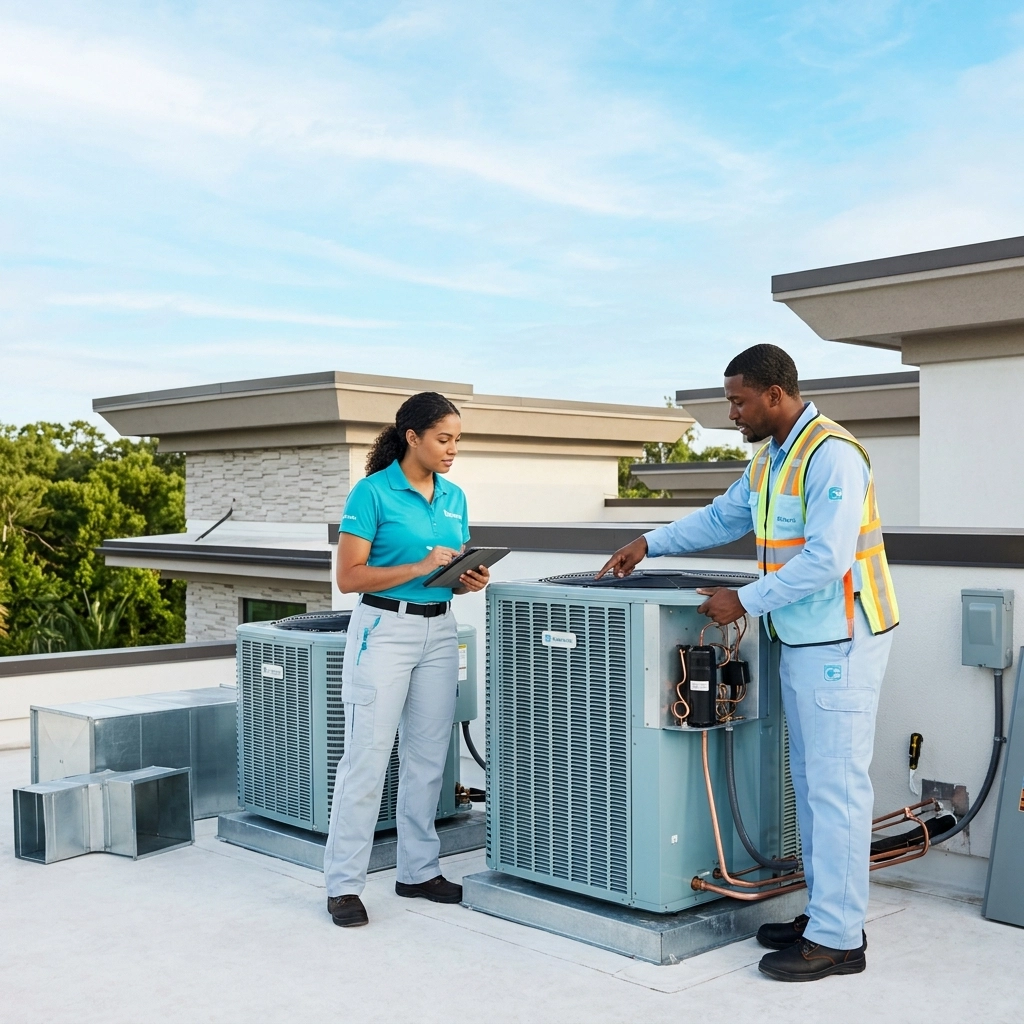
Florida’s climate is unrelenting. Extreme humidity and high temperatures place massive stress on HVAC systems. Most residential units run for 2,500 hours or more annually. Choosing the wrong service for air conditioning installation florida leads to immediate mechanical failure. It results in high energy bills. It creates safety risks. Homeowners must prioritize technical compliance over the lowest price.
Selecting an installer requires a systematic approach. Many companies use "rule of thumb" sizing. This is a technical failure. Professional installation demands precise calculations and adherence to the Florida Building Code. This guide provides a factual framework for comparing contractors and ensuring system longevity.
Verify Licensure and Insurance Status
The State of Florida requires specific licensing for HVAC work. Verify every contractor through the Department of Business and Professional Regulation (DBPR). Unlicensed work is a significant risk. It results in fines for the homeowner. It voids the manufacturer's warranty.
Mandatory Credentials
- Certified Class A or Class B Air Conditioning Contractor license.
- General Liability Insurance (minimum $300,000 for residential).
- Workers’ Compensation Insurance for all employees.
If credentials cannot be verified, the contractor is denied. Florida Trade Specialists filters for these standards. We eliminate the risk of unlicensed labor. Working with unverified individuals leads to legal liability. It leads to substandard work.

Demand a Manual J Load Calculation
Square footage is not a sizing metric. Many installers guess the unit size. This is a primary cause of system failure. An oversized unit cycles on and off too quickly. This prevents dehumidification. It causes mold growth. An undersized unit runs constantly. This leads to component burnout.
Load Calculation Factors
- Total square footage of the home.
- Ceiling height and attic insulation levels.
- Number, type, and orientation of windows.
- Local climate data for Florida regions.
A professional installer performs a Manual J calculation. This is a factual, data-driven assessment. Never accept a quote based on a visual walkthrough alone. Precision sizing is non-negotiable for energy efficiency.
Compare Technical Evaluation Processes
Standard companies offer a basic quote. Top-tier providers conduct a comprehensive diagnostic. A 35-point evaluation is the industry standard for high-level trade services. This identifies existing ductwork issues. It prevents new equipment from being installed on a failing infrastructure.
Evaluation Requirements
- Ductwork Integrity: Leaking ducts waste 30% of cooled air.
- Airflow Testing: Static pressure must meet manufacturer specs.
- Drainage Inspection: Florida humidity creates massive condensation.
- Electrical Capacity: The home must handle the new amperage.
If your home requires an electrical panel upgrade florida, this must be addressed before the AC is installed. New high-efficiency units often require dedicated circuits. Using an outdated panel with a modern HVAC system is a fire hazard.

Evaluate Installation Speed and Availability
The Florida heat makes AC failure an emergency. Turnaround time is a critical comparison metric. Some companies take weeks to schedule. High-capacity networks complete installations within 24 to 48 hours.
Availability Standards
- 24/7 emergency response for existing clients.
- Same-day or next-day diagnostic appointments.
- Stocked local warehouses for immediate equipment access.
Waiting for parts is a sign of poor logistics. Professional networks maintain inventory. They prioritize speed because Florida homes reach dangerous temperatures within hours of a system failure.
Assess Electrical and Integrated Trade Needs
Air conditioning installation is not an isolated task. It is a multi-trade process. It involves high-voltage electrical work. It often requires plumbing for condensate lines. Choosing a multi-trade network ensures all systems work together.
Modern systems often require a circuit breaker replacement florida to match the new unit's specifications. If the contractor is not licensed for electrical work, they must hire a subcontractor. This increases costs. It creates delays. Florida Trade Specialists coordinates these trades internally. This eliminates scheduling conflicts. It ensures total code compliance.

Analyze Warranty and Long-Term Guarantees
A low-cost installation often lacks a labor warranty. Manufacturer warranties only cover parts. They do not cover the cost of the technician’s time. If a compressor fails in year two, the labor cost can exceed $1,500.
Warranty Comparison Points
- Manufacturer Parts: Typically 10 years with registration.
- Workmanship/Labor: Look for a minimum of 1 to 2 years.
- Performance Guarantees: Ensure the unit cools to a specific temperature differential.
Read the fine print. Some companies void their labor warranty if you do not pay for their specific maintenance plan. This is a restrictive practice. Professional services provide transparent, standalone guarantees.
Compare Regional Service Specialization
Florida’s coastal areas have different requirements than inland regions. Salt air causes rapid corrosion of outdoor condenser coils. Installers in these zones must use specialized coatings.
Specialized Regional Requirements
- Coastal Zones: Corrosion-resistant "SeaCoast" coatings.
- High-Wind Zones: Hurricane straps and specialized pads for wind compliance.
- High-Humidity Zones: Enhanced dehumidification settings on smart thermostats.
Florida Trade Specialists operates across various jurisdictions. We understand the specific permitting requirements for each county.
- Trade Services Pinellas County
- Trade Services Orange County
- Trade Services Lee County
- Trade Services Highlands County

Financial Transparency and Options
Professional air conditioning installation florida is a significant investment. Comparing financing options is essential. Transparent pricing means no hidden fees for permits or recycling old equipment.
Cost Red Flags
- Quotes delivered via text or phone without a site visit.
- Requests for 100% payment upfront.
- Refusal to provide a written, itemized contract.
Reliable providers offer flexible financing. They provide clear breakdowns of equipment, labor, and permit costs. This allows for an objective comparison between providers.
The Risks of Inadequate Installation
Poor installation leads to secondary home damage. If the condensate line is installed incorrectly, it leads to water damage. This requires leak detection florida services to find moisture behind walls. It leads to mold. It leads to structural rot.
Consequences of Poor Work
- High humidity levels inside the home.
- Excessive noise from vibrating components.
- Shortened lifespan of the compressor.
- Frequent needs for ac repair florida shortly after installation.
Integrating your AC needs with a broader network prevents these issues. If a leak does occur, having a leak detection specialist within the same network ensures a faster resolution.

Selecting the Right Equipment
The brand of the unit matters less than the quality of the installation. However, equipment specifications must match the Florida environment. SEER2 (Seasonal Energy Efficiency Ratio) ratings determine your monthly savings.
Energy Efficiency Standards
- Minimum SEER2 for Florida: 14.3.
- High-Efficiency Options: 18 SEER2 and above.
- Variable-speed compressors: Best for consistent humidity control.
Higher SEER2 ratings have higher upfront costs. They offer lower long-term operating costs. Professional installers provide a return-on-investment (ROI) calculation. This helps you choose the best equipment for your budget.
Summary of Selection Criteria
Homeowners must use a checklist when comparing installers.
- Licensing: State certified and insured.
- Sizing: Manual J calculation provided.
- Evaluation: Comprehensive duct and electrical check.
- Speed: 24-48 hour installation window.
- Integration: Ability to handle electrical panel upgrades.
- Warranty: Clear labor and parts coverage.
Conclusion
The best air conditioning installation florida is one that adheres to code, prioritizes precision sizing, and offers multi-trade support. Florida Trade Specialists provides access to a network of vetted, licensed professionals. We ensure your home remains cool, efficient, and safe.
Requirements and permits vary by jurisdiction. Always verify with local authorities or a licensed Florida Trade Specialists professional.
Access Professional Trade Services
Complete the form below to connect with a licensed HVAC professional in your area.
[INSERT_CONTACT_FORM_HERE]
Frequently Asked Questions
How long does an AC installation take in Florida?
Most residential installations are completed in 4 to 8 hours. The lead time for scheduling typically ranges from 24 to 48 hours with high-capacity providers.
Do I need a permit for AC installation?
Yes. All HVAC replacements in Florida require a municipal permit. This ensures the installation is inspected for safety and code compliance.
Is an electrical panel upgrade necessary?
If your current panel is at capacity or uses outdated technology, an upgrade is mandatory. This ensures the new AC unit operates safely without tripping breakers.
What is the average lifespan of an AC unit in Florida?
Due to the heat and humidity, units in Florida typically last 10 to 12 years. Regular maintenance is required to reach the upper end of this range.