



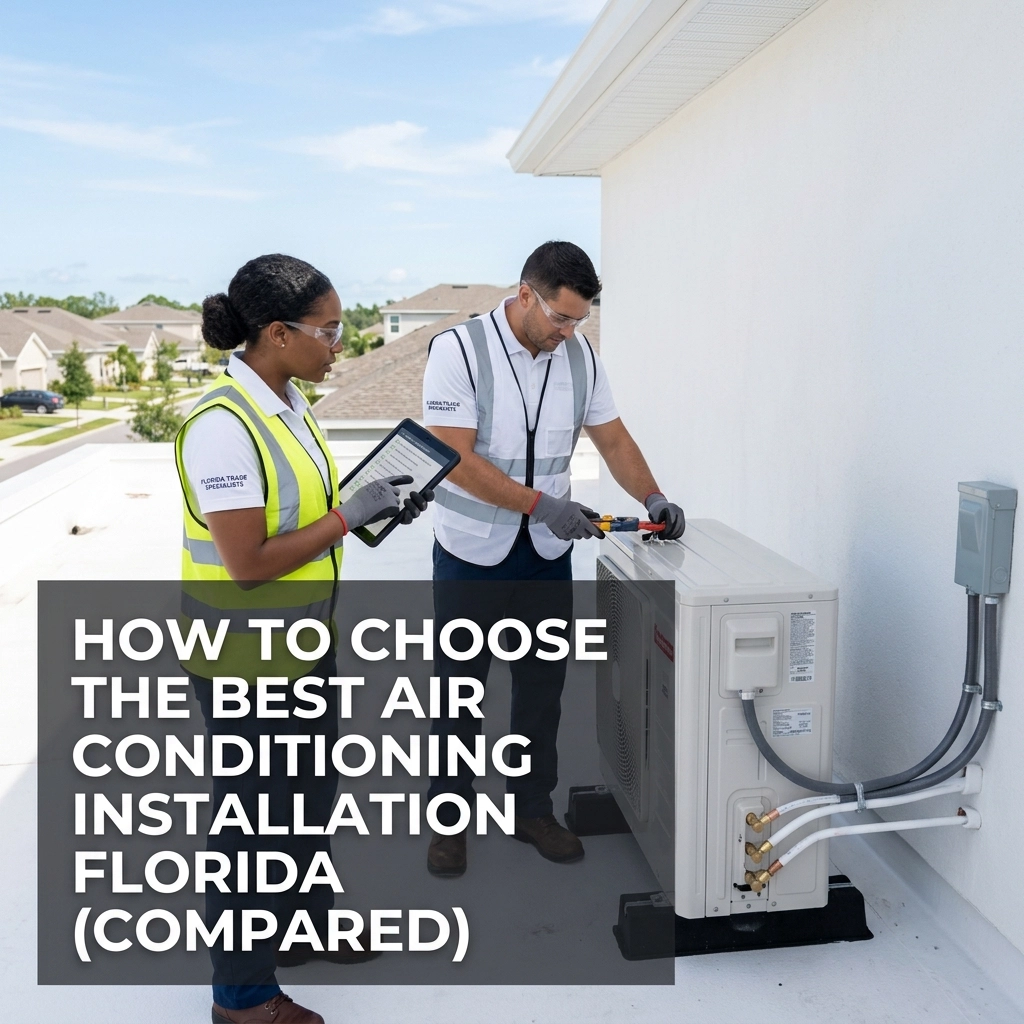
Florida’s extreme climate subjects HVAC systems to relentless stress. High humidity, salt air, and sustained heat accelerate mechanical degradation. Selecting a professional for air conditioning installation florida is a high-stakes decision. Poorly installed systems fail prematurely and consume excessive energy. Most homeowners struggle to distinguish between low-quality handymen and certified specialists. This guide provides the factual criteria required to compare installers and secure a high-performing system.
Mandatory Standards for Air Conditioning Installation Florida
Florida law requires specific credentials for HVAC work. Unlicensed installations are illegal. They void equipment warranties and pose fire risks.
State Licensing and Insurance
A contractor must hold a valid license from the Florida Department of Business and Professional Regulation (DBPR).
- Class A State Certified: Can work on any size unit statewide.
- Class B State Certified: Limited to systems up to 25 tons.
- Insurance: Contractors must carry general liability and workers' compensation.
If credentials cannot be verified, the project must be denied. Licensed professionals ensure work meets the Florida Building Code.
Load Calculations (Manual J)
Guessing unit size is a common failure point. Professionals perform a Manual J load calculation. This assessment considers:
- Square footage of the home.
- Insulation R-values.
- Window types and orientation.
- Local climate data.
Oversized units short-cycle and fail to dehumidify. Undersized units run constantly and burn out motors. Demand a written load calculation before signing any contract.

Comparing Top Installation Providers in Florida
Homeowners must compare providers based on technical protocols rather than price alone.
| Feature | Low-Cost Installer | Florida Trade Specialists Network |
|---|---|---|
| Permit Acquisition | Often ignored or left to owner | Mandatory professional filing |
| Duct Inspection | Visual check only | Pressure testing and sealing |
| Thermostat | Basic non-programmable | Smart, high-efficiency integration |
| Warranty | Equipment only | Equipment + Labor guarantees |
| Code Compliance | Minimal or absent | Strict adherence to local standards |
Providers like Mechanical One and Cool Air USA are known for rapid deployment, often completing installations within 24 to 48 hours. However, speed must not compromise the quality of the vacuum pull or refrigerant charging.
Technical Protocols of a Quality Installation
The physical installation process determines the lifespan of your unit.
Vacuum Pulling and Micron Levels
Air and moisture in refrigerant lines cause acid buildup. This destroys compressors. Technicians must use a vacuum pump to reach 500 microns or lower. This is a non-negotiable step.
Ductwork Integrity
New equipment connected to leaking ducts is a waste of capital. Installers must evaluate the distribution system. In many cases, leak detection florida protocols should be applied to the air handler closet and plenum to prevent energy loss.
Electrical Requirements
Modern high-efficiency systems often require more power. An electrical panel upgrade florida might be necessary to handle the increased load safely. Replacing a circuit breaker replacement florida ensures the dedicated AC circuit remains stable under peak summer loads.

Integrated Home Services and AC Performance
An air conditioner does not operate in a vacuum. It is part of a total home system.
The Role of the Roof and Windows
Heat gain through the attic is a primary load factor. If your roof is failing, a roof replacement florida using reflective materials can reduce AC run times by 20%. Similarly, upgrading to impact windows florida provides better thermal breaks than standard glass. These upgrades allow for smaller, more efficient AC units.
Plumbing and Condensate Management
AC units pull gallons of water from the air daily. Clogged drain lines cause ceiling damage and mold. If you experience leaks, finding a plumber near me for an emergency plumber florida call is a common result of poor AC maintenance. Integrated systems include float switches to shut down the unit if a backup occurs.
Risks of Selecting the Wrong Contractor
The consequences of hiring unverified labor are severe.
- Legal Liability: Work performed without a permit can lead to fines and forced removal of the unit.
- Safety Hazards: Incorrect wiring leads to electrical fires.
- Financial Loss: Inefficient systems lead to utility bills $100–$300 higher than necessary.
- Health Issues: Improperly sized units allow humidity to exceed 60%, fostering toxic mold growth.

Verification Checklist for Homeowners
Use this checklist when interviewing companies for air conditioning installation florida:
- Verify license number on the DBPR website.
- Confirm the contractor will pull a local building permit.
- Ask for a copy of the Manual J calculation.
- Ensure the quote includes a new thermostat and hurricane tie-downs.
- Check for a 10-year parts warranty registration.
For complex renovations, you may also need a water heater installation florida or an ac repair florida service to fix secondary issues found during the primary install.
Florida Trade Specialists Service Areas
Florida Trade Specialists provides access to verified, licensed professionals across the following jurisdictions:
- Orange County
- Pinellas County
- Polk County
- Lee County
- Leon County
- Highlands County
- Walton County
- Indian River County
- Bradford County
- Putnam County
- Franklin County
- Okeechobee County

Frequently Asked Questions
How much does air conditioning installation florida typically cost?
Costs vary based on SEER2 ratings and tonnages. Typical residential installations range from $5,000 to $12,000. High-efficiency heat pumps may cost more but offer long-term savings.
Do I really need a permit for a simple AC swap?
Yes. Florida Building Code requires a permit for HVAC replacements. This ensures a third-party inspector verifies the safety and efficiency of the installation.
What is SEER2?
SEER2 (Seasonal Energy Efficiency Ratio 2) is the current federal standard for measuring AC efficiency. Higher numbers indicate lower electricity consumption.
Can I use my old thermostat with a new unit?
It is not recommended. Modern units use communicating technology or specific voltage requirements that old thermostats may not support.
Does a new AC unit help with indoor air quality?
Yes. A properly installed system with high-MERV filtration and correct dehumidification significantly reduces allergens and prevents mold. For more on moisture issues, see 7 mistakes you're making with leak detection florida.
Conclusion
Air conditioning installation in Florida is a technical process that requires strict adherence to state codes and mechanical standards. Homeowners must prioritize licensed expertise over the lowest bid to avoid long-term financial and safety risks. A properly installed system ensures comfort, reduces utility costs, and protects the structural integrity of the home.
Requirements and permits vary by jurisdiction. Always verify with local authorities or a licensed Florida Trade Specialists professional.
Florida Trade Specialists can ensure your home systems are safe, efficient, and compliant.