



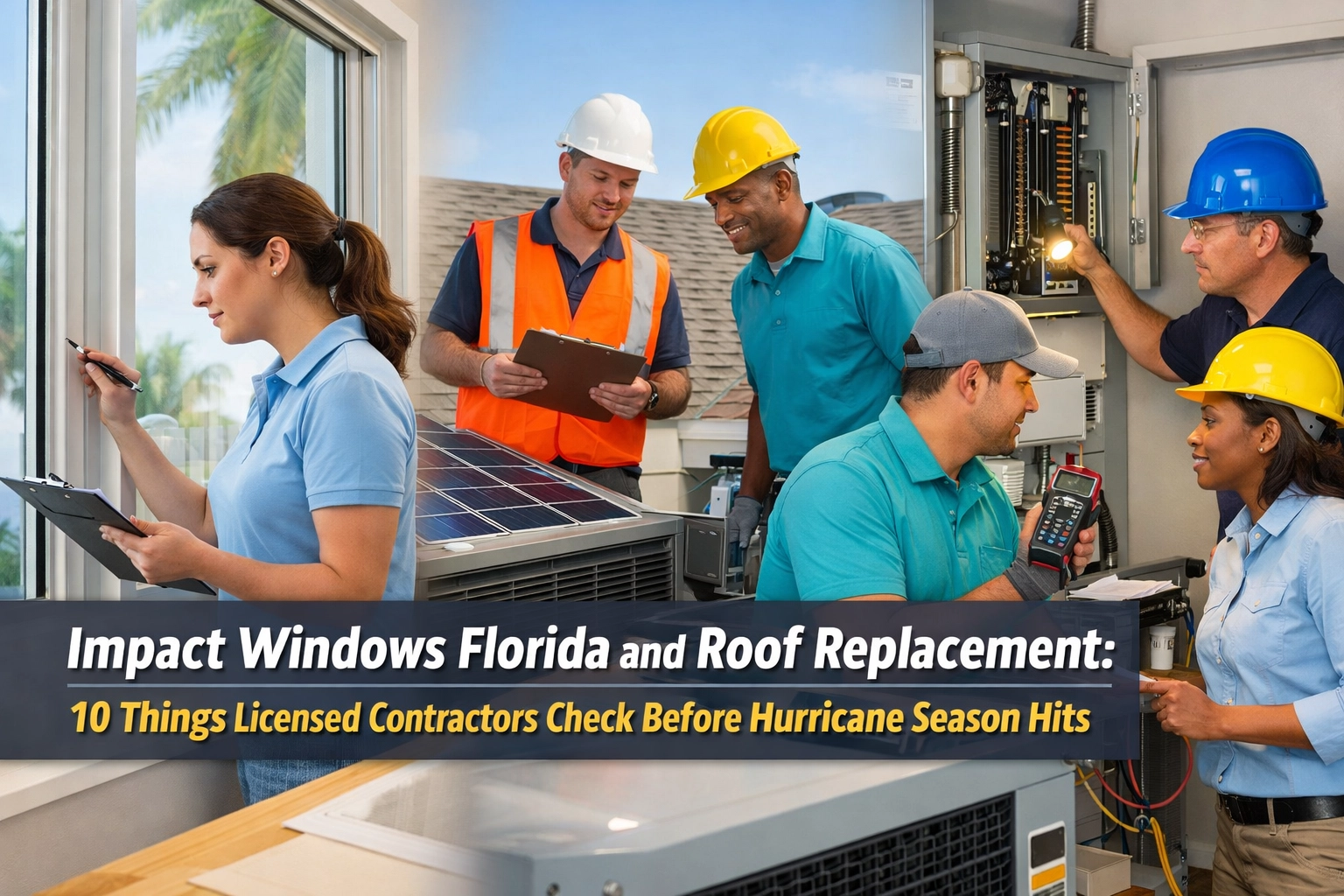
Hurricane season starts June 1st. Your home's two most critical defense systems are impact windows and your roof.
Licensed contractors perform specific inspections before storm season arrives. These checks identify structural vulnerabilities that lead to catastrophic failure during hurricane-force winds. Florida's building codes require specific installation standards for both impact windows Florida and roof replacement Florida projects: standards that protect your home when winds exceed 140 mph.
This inspection protocol separates safe homes from insurance claims.
1. Impact Window Anchor Points and Frame Attachment
Contractors verify every anchor point. Impact windows must attach directly to the structural frame: not just the window opening trim.
The inspection includes:
- Frame-to-wall connection points (minimum 3 per side)
- Anchor bolt torque specifications
- Structural header integrity above each window
- Fastener spacing compliance with Florida Building Code
Impact windows installed without proper anchoring fail at the frame. The glass remains intact. The entire window unit pulls from the wall opening.
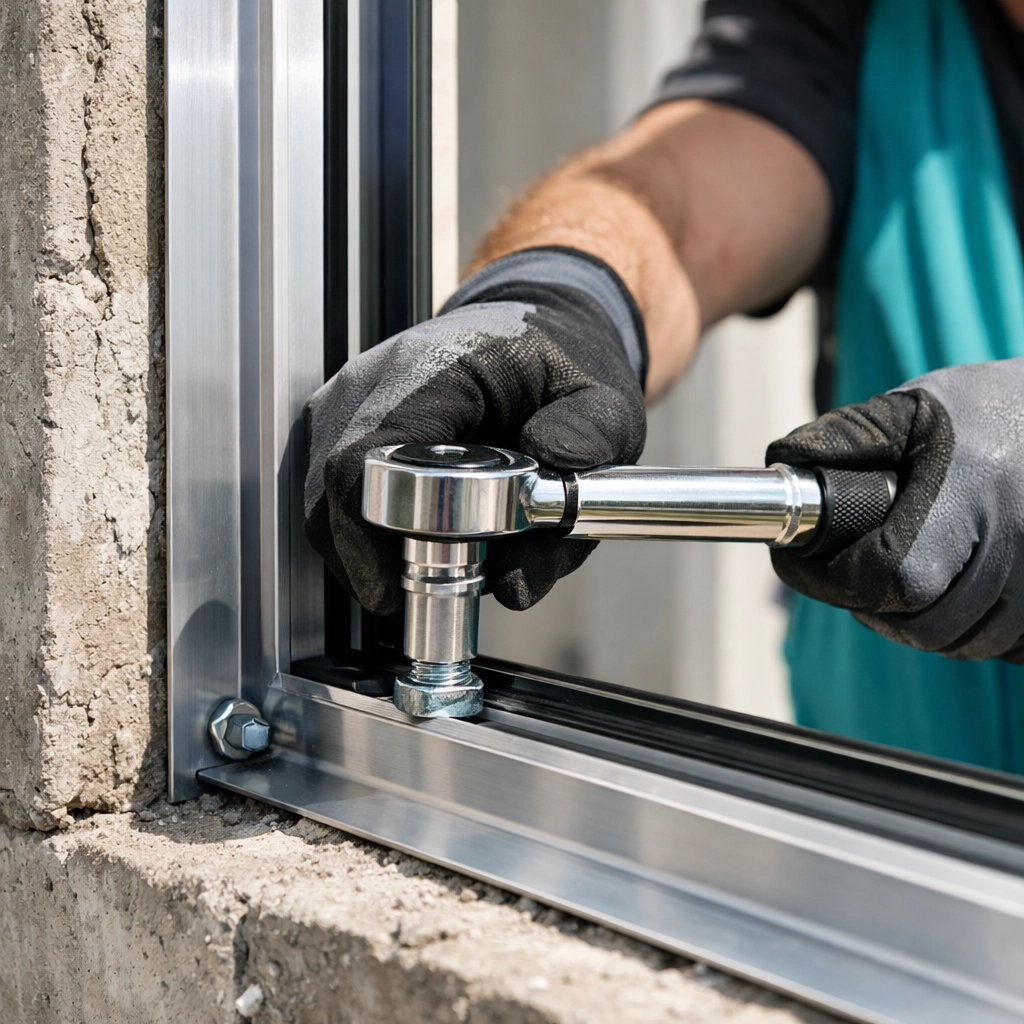
Wind pressure calculations determine anchor requirements. Contractors measure the opening size and calculate the required number of fasteners based on your home's wind zone designation.
Florida has three wind zones. Coastal properties require additional anchoring points.
2. Roof-to-Wall Connection Compliance
Your roof's attachment to the wall structure determines whether it stays attached during a hurricane. Contractors inspect these connection points using specific protocols.
Licensed professionals check:
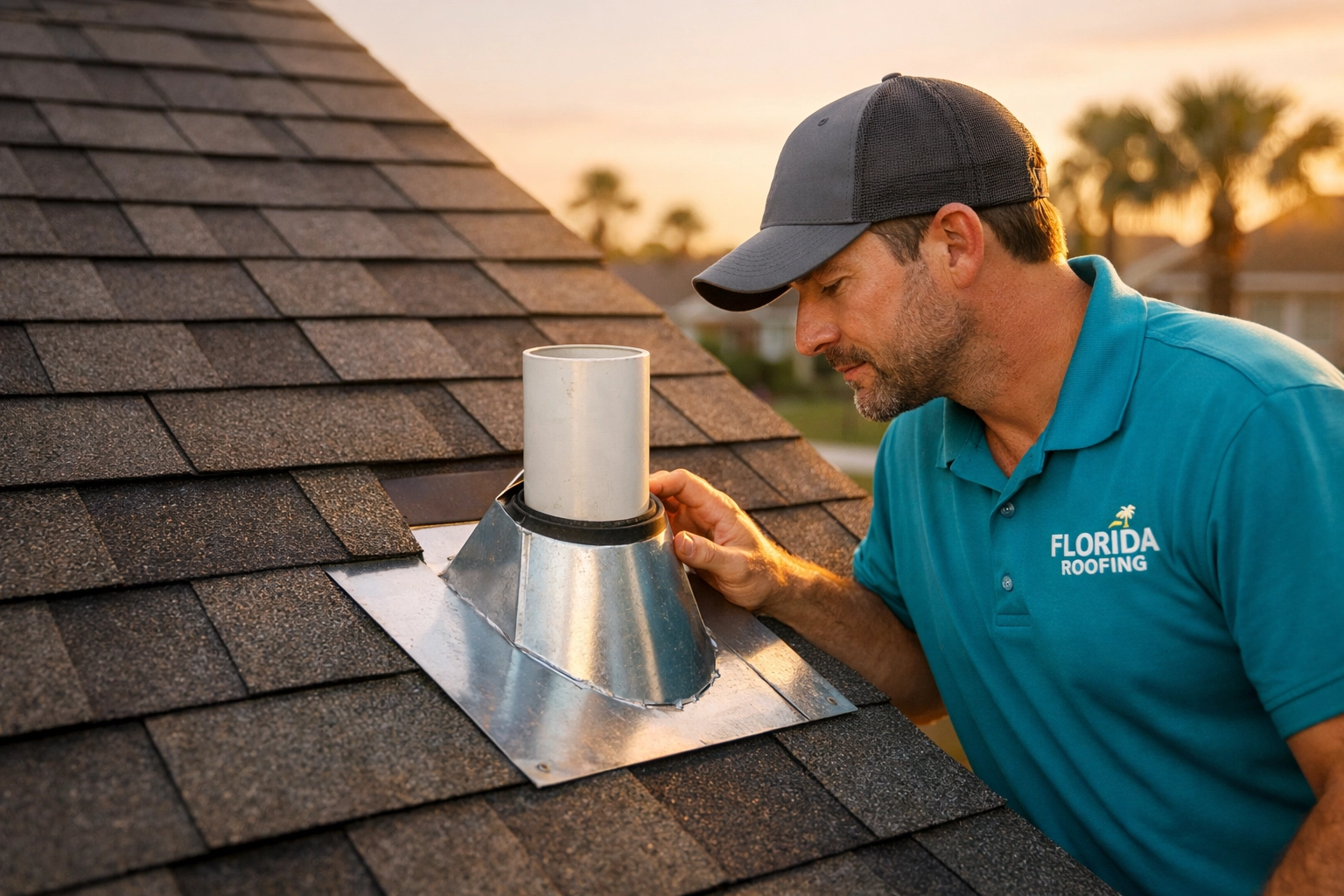
- Hurricane strap or clip installation at every rafter
- Spacing between connection points (maximum 24 inches)
- Proper fastener penetration depth
- Corrosion on existing metal connectors
Roof replacement Florida projects completed after 2002 must include enhanced roof-to-wall connections. Older homes often lack these connections entirely.
The inspection reveals whether your roof meets current standards. Retrofitting older homes with hurricane straps prevents roof lift-off during sustained winds.
3. Roof Decking Attachment Pattern
Roof sheathing must attach to rafters using specific nail patterns. Contractors verify the fastener schedule meets code requirements.
Standard checks include:
- Nail spacing along panel edges (6 inches maximum)
- Field nail spacing in panel interior (12 inches maximum)
- Ring-shank nail usage (required in high-wind zones)
- Plywood thickness appropriate for rafter spacing
Decking installed with staples instead of nails fails first. Staples lack the holding power required for Florida's wind loads.
Contractors walk your entire roof surface. They identify soft spots that indicate water damage or inadequate fastening.
4. Window and Door Seal Integrity
Water infiltration during hurricanes causes more damage than wind. Contractors test every seal around impact windows and exterior doors.
The inspection process includes:
- Silicone sealant condition and adhesion
- Weatherstripping compression and flexibility
- Drainage weep holes (must remain clear)
- Corner joint sealing on window frames
Dried or cracked sealant allows water penetration. A single failed seal compromises the entire window system during wind-driven rain.
Professional contractors perform water tests on suspicious installations. They spray pressurized water at seals while checking for interior leaks.
5. Roof Flashing Installation and Condition
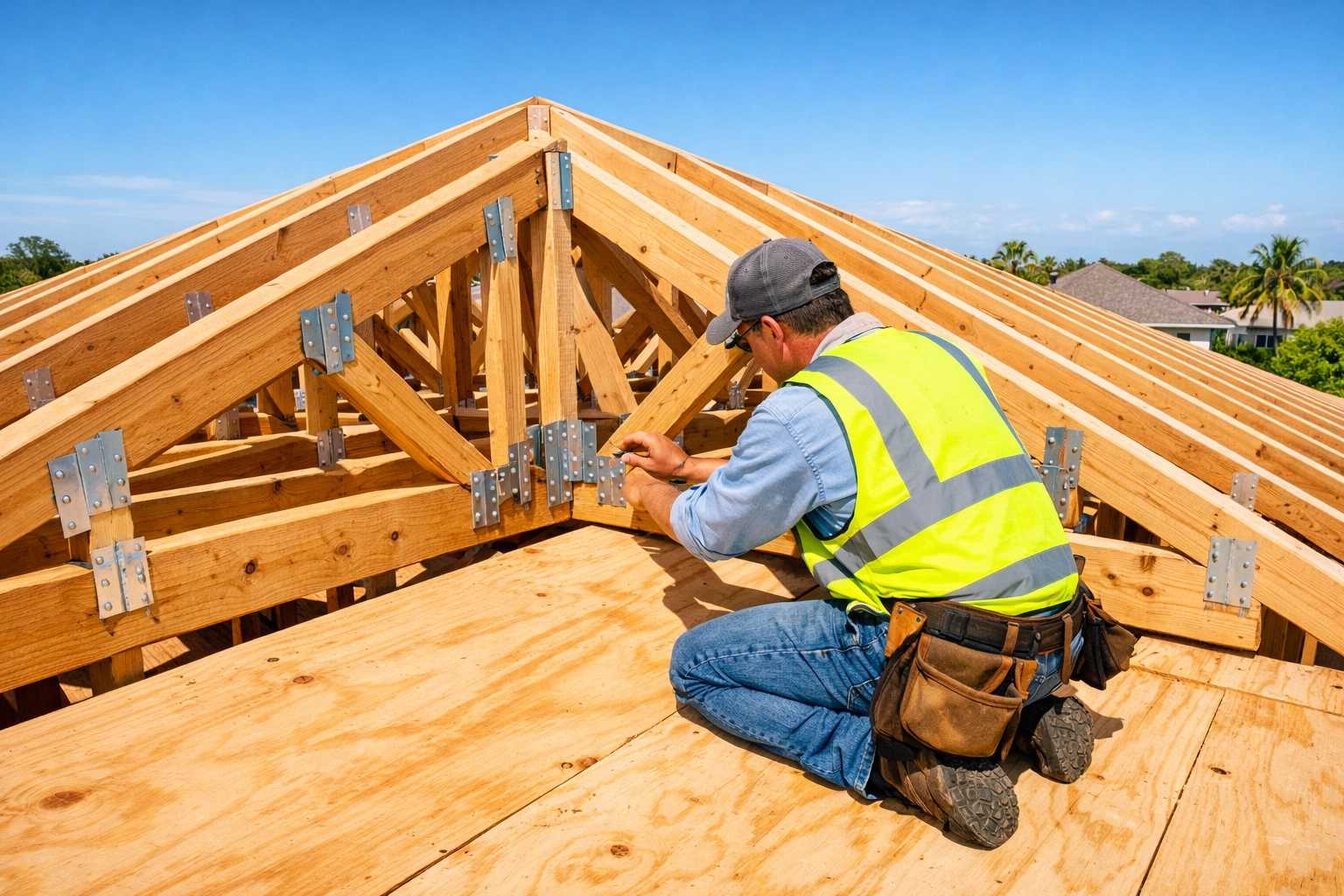
Flashing protects roof penetrations and transitions. Licensed contractors examine every flashing point on your roof system.
Critical flashing locations:
- Chimney surrounds
- Plumbing vent boots
- Valley transitions between roof planes
- Skylight perimeters
- Wall-to-roof interfaces
Missing or improperly installed flashing creates entry points for wind-driven rain. Contractors verify that flashing extends beneath shingles by at least 4 inches and overlaps correctly.
Aluminum flashing corrodes in Florida's salt air. Coastal homes require galvanized or copper flashing for long-term protection.
6. Impact-Rated Product Certification Verification
Not all impact windows meet Florida Product Approval standards. Contractors verify the certification labels on every installed window.
Required documentation includes:
- Florida Product Approval number
- Design pressure rating appropriate for your wind zone
- Large missile impact test certification
- Installation instructions matching actual installation
Windows lacking proper certification fail inspections. They also void insurance coverage during hurricane claims.
Contractors photograph certification labels during inspections. This documentation proves compliance if insurance questions arise after storm damage.
7. Roof Valley and Ridge Vulnerability Assessment
Valleys concentrate water flow. Ridge lines experience maximum wind uplift. Contractors pay special attention to these high-stress areas.
The assessment covers:
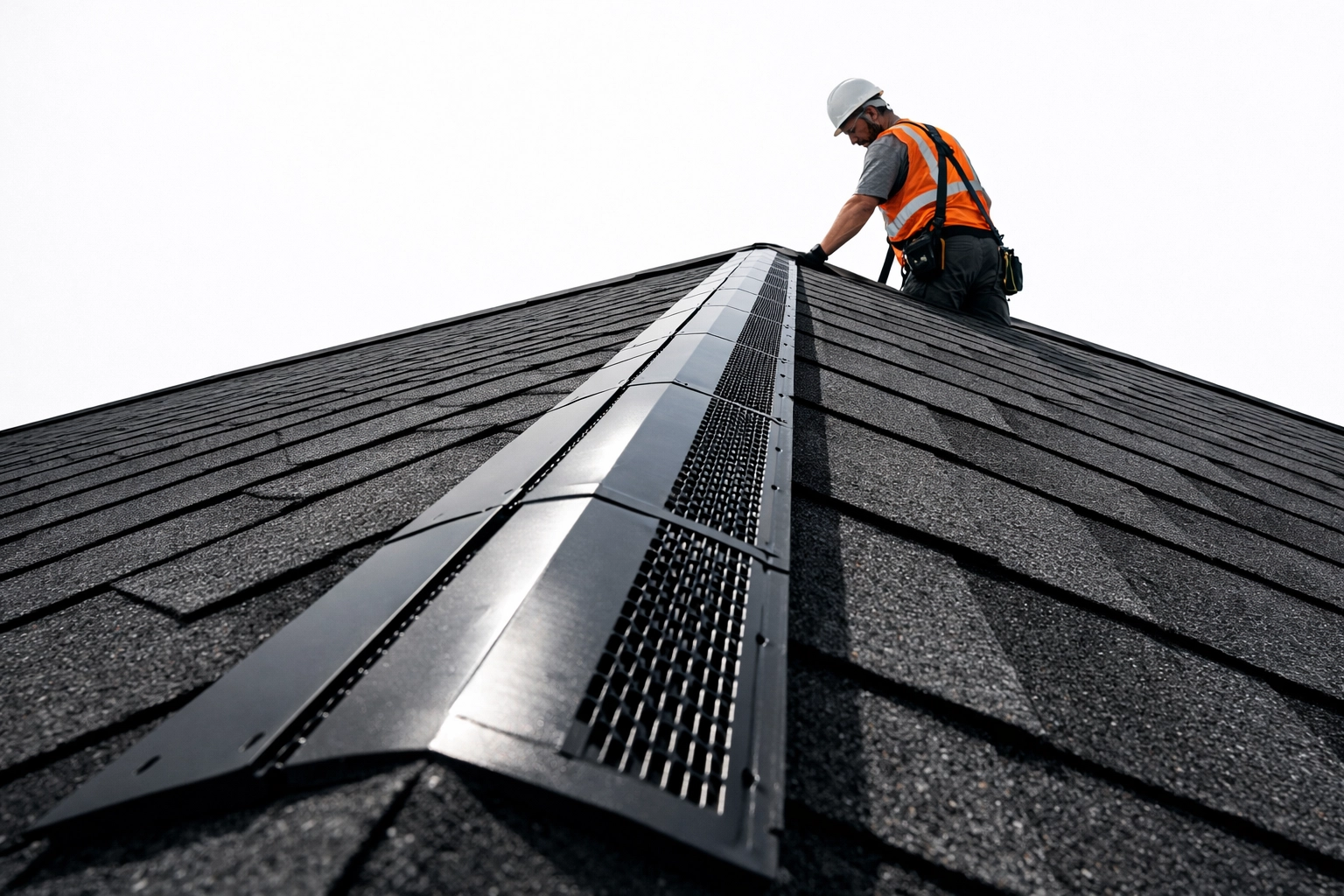
- Ridge vent attachment security
- Valley liner installation beneath shingles
- Ice and water shield presence in valleys
- Starter strip installation along roof edges
Ridge vents installed without proper reinforcement blow off during hurricanes. Contractors verify that ridge caps use longer nails and closer spacing than field shingles.
Metal valley liners must extend minimum 18 inches on each side of the valley centerline. Narrower installations channel water beneath shingles.
8. Soffit, Fascia, and Eave Protection
Wind enters your attic through soffits and eaves. Once wind penetrates the attic space, it lifts the roof from inside.
Contractors inspect:
- Soffit panel attachment to fascia boards
- Vent screening condition and secure mounting
- Fascia board attachment to rafter tails
- Continuous soffit venting versus individual vents
Vinyl soffit panels pop out easily during hurricanes. Contractors verify that panels lock into receiving channels and include backup fasteners.
Damaged soffit vents allow wind and rain into your attic. This pressurizes the attic space and increases uplift forces on the roof structure.
9. Secondary Water Barrier Installation
Florida Building Code requires secondary water barriers beneath roof coverings. Contractors verify this protection exists on your roof.
Secondary barriers include:
- Self-adhering modified bitumen underlayment
- Synthetic underlayment with sealed seams
- Ice and water shield at eaves and valleys
- Proper overlap between underlayment rows (minimum 6 inches)
This layer prevents water intrusion if shingles blow off during a hurricane. Homes built before 1994 often lack secondary barriers entirely.
Roof replacement Florida contractors must install secondary barriers on all projects. The barrier extends from the eave edge up the roof slope minimum 3 feet.
10. Drainage System Capacity and Condition
Your gutter and downspout system must handle hurricane rainfall rates. Florida experiences rainfall rates exceeding 3 inches per hour during tropical systems.
Contractors evaluate:
- Gutter size appropriate for roof square footage
- Downspout quantity and spacing
- Gutter hanger spacing (maximum 24 inches)
- Proper slope toward downspouts (minimum 1/4 inch per 10 feet)
Undersized gutters overflow during heavy rain. Water cascades down exterior walls and infiltrates through windows and doors.
Contractors also inspect where downspouts discharge. Water must flow away from the foundation. Improper drainage undermines foundation walls and creates interior flooding risks.
Related systems like leak detection Florida services become critical after hurricanes when hidden water intrusion causes long-term damage.
Understanding Multi-System Hurricane Protection
Hurricane preparation extends beyond windows and roofing. Your electrical, plumbing, and HVAC systems also require pre-season inspections.
Electrical panel upgrade Florida projects ensure your home can safely restore power after storms. Circuit breakers must handle the load when multiple systems restart simultaneously.
AC repair Florida contractors verify outdoor unit anchoring and disconnect box security. Wind-blown debris damages unsecured equipment.
Plumbing systems require attention too. Know your emergency shutoffs before storms arrive. Consider connecting with an emergency plumber Florida contact before you need one.
Licensed Contractor Verification Standards
Florida law requires specific licensing for both impact windows Florida installation and roof replacement Florida work. Contractors performing these services must hold active licenses in their respective trades.
Verify credentials before allowing inspection or work:
- Active Florida contractor license number
- Workers' compensation insurance
- General liability coverage minimum $1 million
- Product manufacturer certifications for materials used
Unlicensed contractors cannot pull permits. Work performed without permits creates liability issues and complicates insurance claims.
Pre-Season Inspection Timing
Schedule inspections during April or May. Hurricane season begins June 1st, but contractor availability disappears once forecasts show storm development.
Early inspections provide time for repairs before storms threaten. Materials and labor become scarce once hurricane watches are issued.
Most inspection and minor repair work completes within 2-3 weeks when scheduled early. Emergency repairs during active storm threats take months and cost significantly more.
When Multiple Systems Need Attention
Hurricane preparation often reveals multiple system deficiencies. Your impact windows may need sealing while your roof requires flashing repairs. Your electrical panel might need upgrading while your AC system needs securing.
Florida Trade Specialists coordinates multi-trade inspections and repairs. Licensed professionals across electrical, plumbing, HVAC, and structural trades work together to prepare your home.
This coordination eliminates scheduling conflicts between different contractors. It ensures all systems meet code requirements before hurricane season starts.
Protection Beyond Compliance
These 10 inspection points represent minimum standards. They identify failures that cause catastrophic damage during hurricanes.
Licensed contractors don't just check boxes. They evaluate your specific home's vulnerabilities based on age, location, and construction type.
Coastal homes face different challenges than inland properties. Older homes require different attention than new construction. Your home's exposure to wind and water dictates priority repairs.
Professional inspections document your home's condition. This documentation supports insurance claims if damage occurs despite proper preparation.
Hurricane season arrives every year. The inspection protocol never changes. Your home either meets the standards or faces preventable damage.
Getting your impact windows Florida and roof replacement Florida systems inspected by licensed professionals protects your largest investment. Schedule those inspections now: before forecasts show storm development and contractors stop accepting new clients.