




You type "plumber near me" into your phone. You need help. Fast.
But here's what most Florida homeowners don't realize: not all plumbing work is created equal. Florida's unique climate, strict building codes, and updated 2025 regulations mean that what seems like a simple fix can quickly become a compliance nightmare: or worse, a costly insurance claim denial.
Before you hire the first name that pops up on Google, you need to understand what separates legitimate, licensed plumbing work from unlicensed repairs that could haunt you later. This guide covers the 10 critical things every Florida homeowner must know to protect their home, their wallet, and their peace of mind.
1. Most Plumbing Work Requires a Permit in Florida
Installing a water heater. Moving drain lines. Re-piping your bathroom.
All of these require permits.
Permits aren't bureaucratic red tape. They ensure your plumbing meets Florida Building Code. They protect you during home sales. They're often required for insurance claims if water damage occurs.
Unpermitted work can result in:
- Failed home inspections
- Denied insurance claims
- Mandatory teardown and replacement
- Legal liability if issues arise
Licensed plumbers pull permits. Unlicensed handymen don't.
2. Florida Law Requires Licensed Plumbers for Major Work
Florida statute is clear.
Water heater installation, re-piping, sewer line work, and any project requiring a permit must be performed by a state-licensed plumber.
Minor repairs: replacing faucets, showerheads, or toilet parts: can be DIY. Everything else requires credentials.
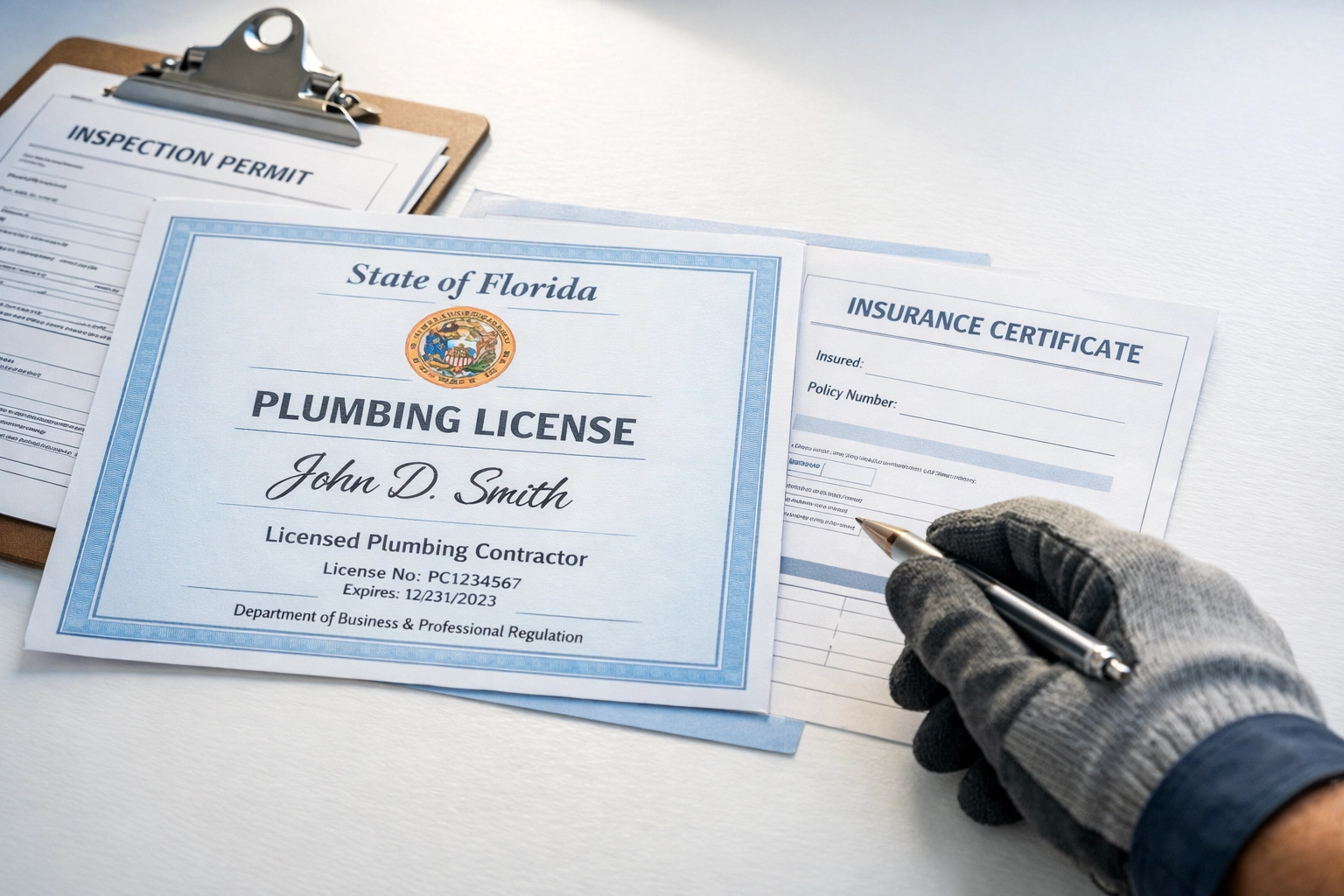
If credentials cannot be verified, walk away.
Working with unlicensed contractors puts you at risk for:
- Code violations
- Voided warranties
- No recourse if work fails
- Liability for accidents or injuries on your property
Florida Trade Specialists only works with fully licensed, insured professionals. No exceptions.
3. Florida Follows the Florida Building Code (FBC), Plumbing Volume
Every plumbing system in Florida must comply with the Florida Building Code (FBC), Plumbing Volume.
Updated every three years, the code governs:
- Water supply systems
- Drainage and venting
- Fixture installation standards
- Material requirements
Your local municipality may add stricter requirements. Miami-Dade, Broward, and Tampa have additional rules layered on top of state code.
Always check with your local building department before starting work. What's allowed in Jacksonville may not be allowed in Fort Lauderdale.
4. Drainage and Venting Requirements Are Critical: and Commonly Violated
Every plumbing fixture must connect to a vent.
Vents allow sewer gases to escape. Drain pipes must slope at least 1/4 inch per foot. Cleanouts must be installed at specific intervals.
Improper drainage or venting is one of the most common code violations in Florida.
Consequences of poor venting:
- Slow drains
- Gurgling sounds
- Sewer gas leaks into your home
- Failed inspections
- Expensive retrofits
Licensed plumbers understand vent stack requirements. Unlicensed workers often ignore them.
5. Drain Traps Must Be Installed Correctly
Every drain requires a properly installed trap.
Traps prevent harmful sewer gases from entering your home. They create a water seal that blocks gases while allowing wastewater to flow.
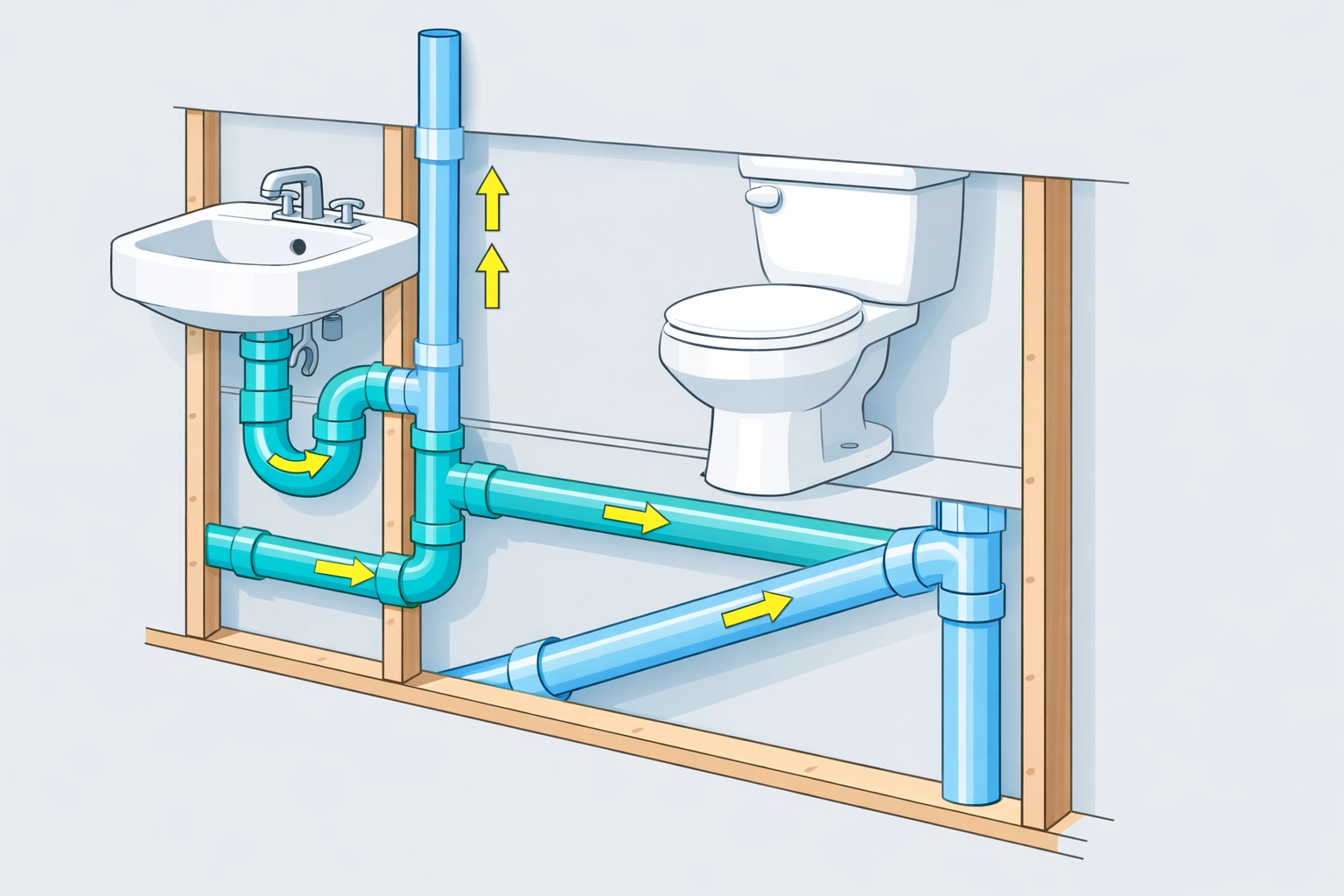
Common violations include:
- Missing traps
- Incorrect trap type (S-traps instead of P-traps)
- Improper trap arm length
- No venting on trap
If you smell sewer gas in your home, your traps are likely installed incorrectly or have failed.
6. Backflow Prevention Devices Are Mandatory: and Now Require Annual Testing
Florida plumbing code requires backflow prevention devices to stop contaminated water from flowing into the public water supply.
As of 2025, annual testing and proper documentation are required statewide for most backflow devices.
Your plumber should:
- Install certified backflow preventers
- Test devices annually
- File documentation with local water authorities
- Replace failed devices immediately
Failure to comply can result in water service disconnection.
7. Water Heater Placement and Seismic Strapping Are Now Regulated
New 2025 rules govern water heater installation: even in South Florida.
Water heaters must now meet specific placement requirements and include seismic strapping to prevent tipping during storms or structural shifts.
Water heater installation must be performed by a licensed plumber and requires a permit.
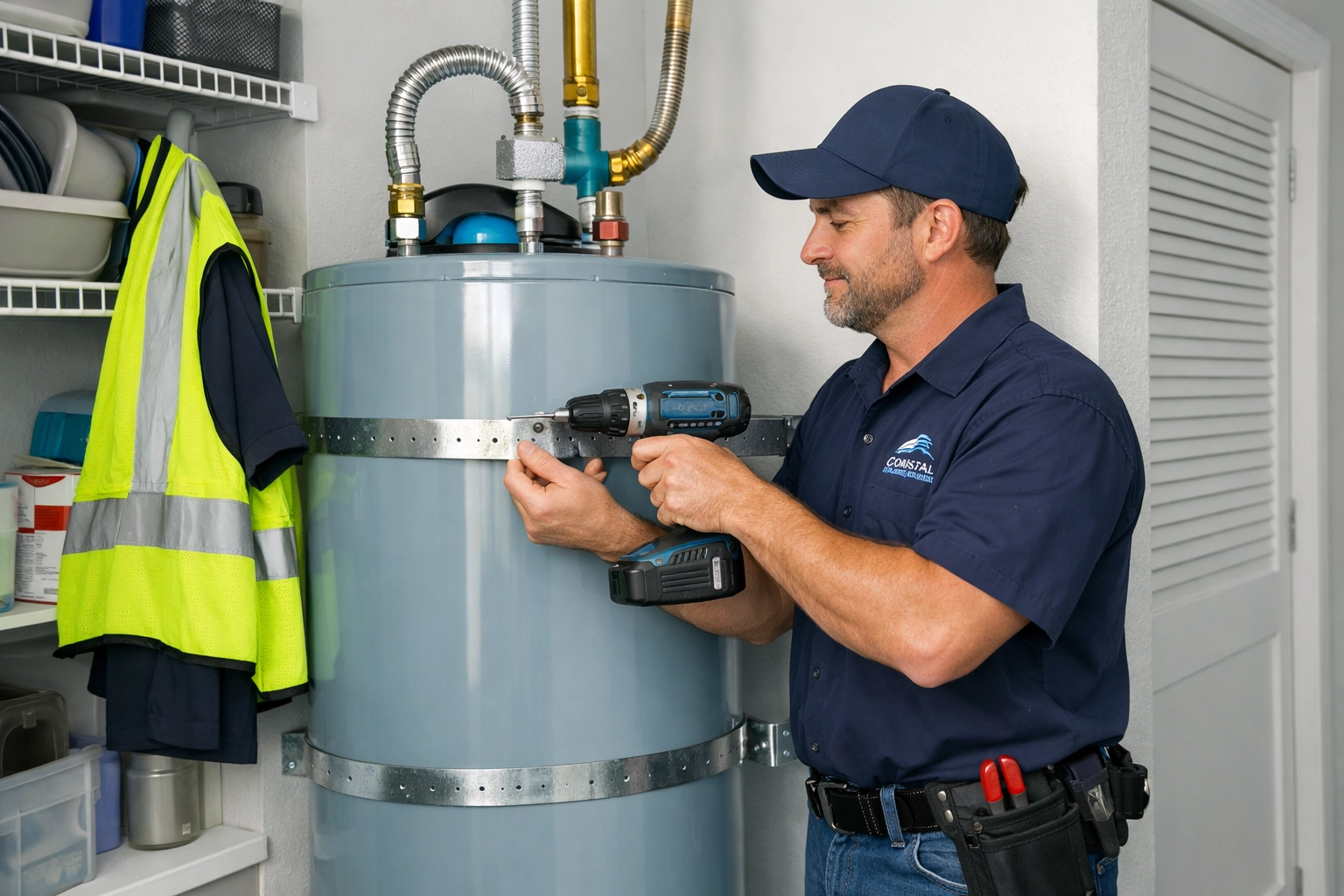
DIY water heater installation is illegal in Florida for installations requiring permits: and most do.
For more information on Florida plumbing services, consult licensed professionals who stay current on code updates.
8. Shut-Off Valve Access and Labeling Are Required
Under 2025 Florida Building Code updates, shut-off valves must be accessible and clearly labeled.
This applies to:
- Main water shut-off
- Individual fixture shut-offs
- Water heater isolation valves
- Appliance supply valves
Inspectors now verify valve accessibility during inspections and repairs.
Why this matters: In an emergency, you need to shut off water immediately. Hidden or unlabeled valves waste critical time during leaks or burst pipes.
9. Avoid Outdated Materials Like Galvanized Pipe
Galvanized pipe systems are officially discouraged as of 2025.
Insurance companies increasingly refuse to renew policies on homes with galvanized plumbing due to high failure rates.
The 2023 Florida Building Code requires:
- Durable, corrosion-resistant materials
- Eco-friendly piping options
- Materials suited to Florida's water chemistry
If your home still has galvanized pipes, plan for replacement. It's not a matter of if they'll fail: it's when.
Modern plumbing materials last longer and perform better in Florida's climate.
10. Always Check Local Regulations Before Starting Work
Florida has statewide plumbing codes. But local municipalities add their own requirements.
The City of Tampa has different permit processes than unincorporated Hillsborough County. Miami-Dade enforces stricter wind load requirements. Some counties require additional inspections.
Contact your local building department before beginning any plumbing project.
Verify:
- Permit requirements
- Inspection schedules
- Local code amendments
- Contractor licensing requirements
Unpermitted work is discovered during home sales, insurance inspections, and after system failures. The cost to fix unpermitted work always exceeds the cost of doing it right the first time.
For professional trade services across Florida counties, work with contractors who understand local jurisdiction requirements.
Protect Your Home and Your Investment
Searching "plumber near me" shouldn't be a gamble.
Florida's plumbing codes exist to protect homeowners from unsafe installations, water damage, and costly system failures. Licensed plumbers understand these requirements. They pull permits. They pass inspections. They deliver work that won't come back to haunt you.
Unlicensed work may be cheaper upfront. But it creates long-term liability.
When you need plumbing services in Florida, verify credentials. Confirm licensing. Ask about permits. Check for insurance.
Florida Trade Specialists connects homeowners with fully licensed, code-compliant plumbing professionals across Florida. Every contractor in our network is verified, insured, and held to the highest standards.
Requirements and permits vary by jurisdiction. Always verify with local authorities or a licensed professional before beginning plumbing work.
Ready to connect with licensed plumbing professionals in your area? Contact Florida Trade Specialists today.