



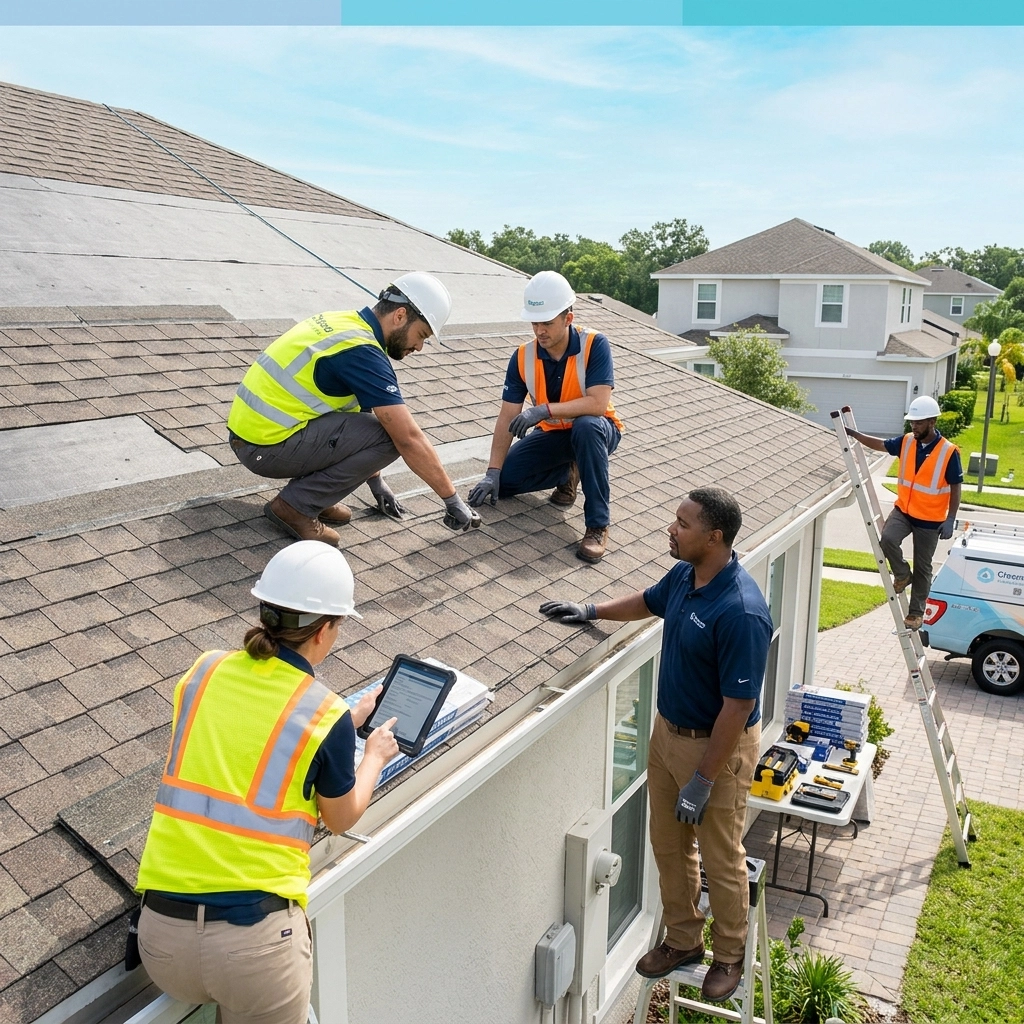
Florida roofs face extreme environmental degradation.
High UV exposure destroys shingles.
Humidity promotes mold growth.
Hurricane-force winds test structural integrity.
Homeowners often make critical errors during roof replacement.
These errors lead to premature failure.
They result in financial loss.
This guide details the seven most common mistakes.
It provides factual solutions for Florida residents.
1. Delaying Replacement Until Leaks Occur
Waiting for a visible leak is a strategic error.
Water intrusion begins long before it hits a ceiling.
Roofing underlayment fails first.
Decking rots silently.
Mold spreads in attic spaces.
Internal structural damage is expensive.
The Fix:
- Monitor roof age.
- Most asphalt shingles in Florida last 15 to 20 years.
- Inspect for granule loss.
- Check for curling or brittle shingles.
- Replace the system before structural decay begins.
Early action reduces the need for full decking replacement.
It prevents the need for emergency ac repair florida caused by attic moisture.
Proactive replacement is a financial necessity.
2. Choosing Substandard Materials for the Climate
Florida is a High Velocity Hurricane Zone (HVHZ).
Standard materials fail under Florida conditions.
Cheap shingles blow off in minor storms.
Dark materials trap heat.
Heat increases cooling costs.
Heat degrades the roof from the inside out.

The Fix:
- Select impact-rated shingles.
- Use reflective "Cool Roof" technology.
- Consider metal roofing for 50-year longevity.
- Ensure all materials meet the Florida Building Code.
- Check for salt-air resistance in coastal counties.
Roof replacement florida requires high-performance components.
Secondary water barriers are mandatory.
Self-adhering membranes protect the home if shingles fail.
Do not prioritize initial cost over long-term durability.
3. Hiring Unlicensed and Uninsured Labor
Unlicensed work is illegal in Florida.
It carries zero consumer protection.
Unlicensed individuals cannot pull required permits.
Lack of insurance creates homeowner liability.
If a worker falls, the homeowner pays medical costs.
If the roof fails, the homeowner has no legal recourse.
The Fix:
- Verify licenses through the Florida Department of Business and Professional Regulation (DBPR).
- Request current certificates of general liability insurance.
- Request workers' compensation insurance documentation.
- Reject any contractor who asks the homeowner to pull the permit.
- Verify credentials before signing any contract.
Florida Trade Specialists ensures all network participants maintain strict compliance.
Verified credentials protect your asset.
Unverified labor is a risk to your property.
4. Ignoring Proper Attic Ventilation
Heat is the primary enemy of Florida roofs.
Attic temperatures exceed 140 degrees without ventilation.
This heat "bakes" shingles.
It voids manufacturer warranties.
It forces air conditioners to run constantly.
Inadequate ventilation causes moisture buildup.
Moisture leads to wood rot.
The Fix:
- Install a balanced system of intake and exhaust vents.
- Use ridge vents for maximum exhaust.
- Ensure soffit vents are not blocked by insulation.
- Consult a professional to calculate required square footage of ventilation.
- Keep attic temperatures within 15 degrees of outside air.
Proper ventilation extends roof life.
It reduces the demand for air conditioning installation florida.
Integrated home systems function better when the attic is cool.
5. Re-Roofing Over Old Shingles
"Nail-overs" involve installing new shingles over old ones.
This practice is dangerous in Florida.
It adds excessive weight to the structure.
It hides existing wood rot.
New shingles do not adhere properly to old ones.
High winds easily strip multiple layers.
Most manufacturers void warranties for re-roofs.

The Fix:
- Demand a complete "tear-off."
- Remove all old materials down to the wood deck.
- Inspect every inch of the roof decking.
- Replace damaged or soft wood immediately.
- Re-nail the decking to meet current hurricane codes.
A clean surface is required for a secondary water barrier.
Tear-offs are the only way to guarantee structural safety.
Florida building codes often prohibit more than two layers.
One layer is the professional standard for storm resistance.
6. Neglecting the Drainage System and Flashings
A roof is a system, not just shingles.
Flashings prevent leaks at joints and chimneys.
Gutters move water away from the foundation.
Old flashings often have pinhole leaks.
Reusing old flashings is a common shortcut.
It results in immediate leaks after the new roof is installed.
The Fix:
- Install new metal flashings with every replacement.
- Use lead or high-grade plastic boots for plumbing stacks.
- Clean and realign gutters during roof work.
- Ensure downspouts direct water five feet away from the home.
- Inspect for proper "drip edge" installation.
Failure to manage water flow destroys siding and foundations.
Effective drainage prevents the need for leak detection florida later.
Flashings are the most vulnerable points of the system.
They must be replaced, not repaired.
7. Falling for "Storm Chaser" Scams
After major storms, unverified contractors flood the state.
They offer "free roofs" via insurance scams.
They demand large deposits upfront.
They perform substandard work.
Many disappear before the job is finished.
Homeowners are left with liens on their property.
Insurance fraud is a felony in Florida.
The Fix:
- Work only with established local companies.
- Get multiple written estimates.
- Avoid door-to-door solicitations.
- Never sign an Assignment of Benefits (AOB) without legal review.
- Pay only when specific milestones are completed.
Local specialists understand regional requirements.
Trade services Broward County FL differ from Alachua County codes.
Regional expertise prevents legal and structural failures.

Florida Building Code Compliance
All roof replacements must follow the Florida Building Code.
Permits are mandatory.
Inspections are required at various stages.
These inspections verify decking attachment.
They verify underlayment installation.
They verify final shingle application.
Skipping permits makes the home unsellable.
It makes the home uninsurable.
The Consequences of Non-Compliance:
- Fines from local building departments.
- Mandatory removal of the new roof.
- Denial of insurance claims after a storm.
- Title issues during property transfers.
Integration with Other Home Systems
Roofing affects every system in the house.
A new roof may require moving electrical mastheads.
This necessitates an electrical panel upgrade florida.
Solar water heater installation florida must be coordinated with roofing schedules.
Impact windows should be installed alongside roofing to seal the building envelope.
Comprehensive home maintenance requires a multi-trade approach.
Summary of Key Takeaways
- Inspect annually: Catch damage before it becomes a catastrophe.
- Quality over cost: Use materials rated for 150+ mph winds.
- Verify licenses: Only hire DBPR-licensed contractors.
- Ventilate: Protect shingles from extreme heat.
- Complete tear-off: Never install shingles over old layers.
- New flashings: Do not reuse old metal components.
- Local expertise: Avoid out-of-state storm chasers.
Verified Trade Support
Managing multiple contractors is difficult.
Florida Trade Specialists simplifies the process.
We connect homeowners with vetted professionals.
Our network covers all major trades.
We serve residents in Collier County, Brevard County, and beyond.
Safety and compliance are our core standards.

Disclaimer: Requirements and permits vary by jurisdiction. Always verify with local authorities or a licensed Florida Trade Specialists professional.
Direct Action Commands
- Check your roof age. If it exceeds 15 years, it is a liability.
- Verify your contractor. Use the DBPR portal for every search.
- Review your insurance policy. Ensure your roof meets current wind mitigation standards.
- Schedule an inspection. Professional assessments prevent emergency expenses.
Maintain your home's integrity.
Avoid costly delays.
Ensure your systems are safe and compliant.
Contact Florida Trade Specialists to secure your property today.